
Last week No Sweat was due to speak at the historic Tolpuddle Martyrs Festival, an annual gathering of the trade union movement in Dorset that commemorates the memory of trade union activists deported to Australia in the 18th century for daring to organise. Sadly, the severe weather warning from the Met Office led to the festival being cancelled at the last minute, and we didn’t get a chance to address trade union activists on our chosen topic – the involvement of the UK trade unions in exploitation of workers in the Global South.
This is not an easy topic.
The trade union movement has shown its strength and resilience over the past year in the face of a cost-of-living crisis in the UK, a wave of strikes across numerous sectors has seen the largest growth in the workers struggle in Britain for decades. In among this revival in the union movement and growth in union membership has been serious international solidarity work – and every trade unionist should be proud of this international solidarity. But there is one area that lets us all down, the procurement of merchandise.
Because of the global nature of manufacturing in the modern age, the sourcing of branded merchandise is almost entirely done from countries in the Global South. Countries such as India, Pakistan, Bangladesh and Sri Lanka are where our T-shirts, jackets, hats, socks, bags, pens and lanyards are often sourced from. Capitalism has created this supply chain and decades of reports have highlighted the exploitation of the workers involved.
While there are accreditation bodies – in face a whole accreditation industry – that attempts to deal with this exploitation, which audits factories to show improvements here and there, it is becoming widely accepted that the auditing model accreditations rely on has completely failed to protect workers. In 2020 a decade long study from MSI Integrity declared the whole accreditation and auditing model ‘Not Fit for Purpose’.
So, as we see the explosion in the demand for workers’ rights, with trade unions taking strike action to demand better pay and conditions in the UK, the campaign slogans that carry those demands, which are being printed on T-shirts, bags, hats etc, are being made by workers that are being exploited in the Global South, and which are giving money to large corporations that are often actively anti-union.
Now, the large companies that source from factories in the Global South can point to audits giving them a clean bill of health, and their accreditations that show how “ethical” they are, but very rarely will they give details of the trade unions that represent their workers and the strength of those trade unions in the factories. This is because they have none.
Where trade unions do exist it is in spite of, not because of the corporations that supply our merchandise. The brave work of trade union organisers in the countries such as Bangladesh, fighting every inch for recognition of workers’ rights has established unions in some factories, but it is no thanks to the corporations that hold the purchasing power. For the most part the best we can expect is a Corporate Social Responsibility statement from them that says ‘workers making our products have the right to form trade unions’ without actually doing anything to support trade unions organising in the countries they are sourcing from.
This is just not good enough.
We cannot continue to participate in the exploitation of workers when sourcing branded merchandise for our trade unions and our campaigns. The right to join a union is too easy for corporations to say, and it is not the same as a strong, unionised workforce. A non-unionised factory does nothing to support the trade union movement that is trying to build power in producing countries of the Global South. A trade union negotiating conditions in a factory in a country like India needs the open support of trade unions in the UK to build their power.
International solidarity is important, but solidarity is an action, not a sentiment. Solidarity means using our purchasing power to back the trade unions trying to organise in the factories we are sourcing from. Trade unions in the UK need to be vocal supporting the trade unions in the Global South, not just in words of support for their struggles but with actual policies of sourcing union-made products and letting the factory owners and the corporations know that we will only source their products if the trade union representing their workers has a seat at the table.
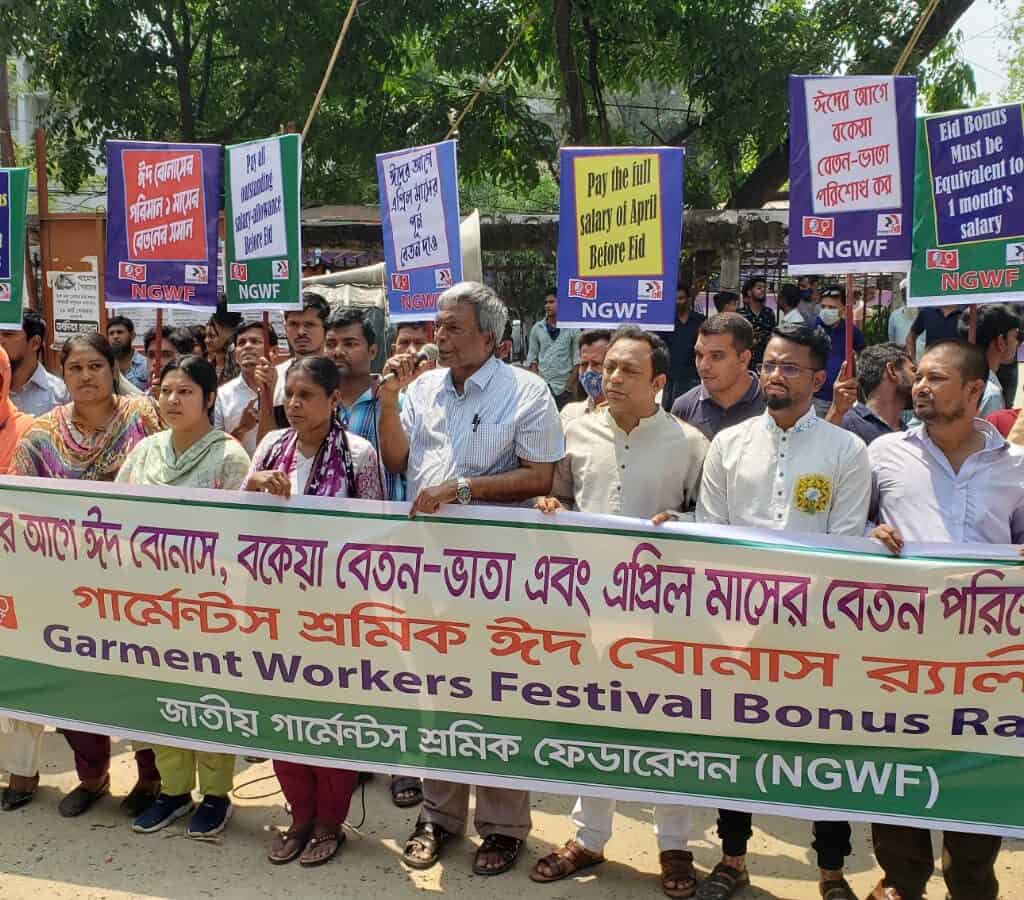
If trade unions in the UK, which often have substantial merchandise budgets, can use their purchasing power in this way, then they can directly support the power-building activities of fellow trade unions in the Global South. If the powers that be, whether that’s brands, factory owners, or government officials, know that the trade unions in their own country are being supported in this way by trade unions in the UK, this will increase the union’s bargaining power and they will command greater respect when demanding better hours, wages and conditions for their members.
This is the activity that No Sweat is engaged in with our T-shirt project. We are communicating with trade unions in Bangladesh and India to find the factories that make the branded merchandise that trade unions in the UK use, where they have the strongest presence. We are building a union-made supply chain.
In this process we are letting the factory owners know that the only reason we will source from them is on the recommendation of the independent trade union that represents their workers. Any infringement on the workers’ rights will lead to an end of the contract with their factory, until the trade union advises us to return. This is international solidarity in action, and it helps trade unions in producing countries build power.
But we can’t do this alone, we need the UK trade union movement to support us. In recent weeks we have reached out to all the major trade unions in the UK to invite them to come on board and make union-made a label they can be proud of.
It’s time to put international solidarity into action.